
Back on the Ice: Eero’s Journey After a Syndesmosis Injury
An unexpected injury during a football warm-up put Eero Kalpamaa’s ice hockey season on hold. With surgery and rehabilitation behind him, he has returned to the sport that has been part of his life since childhood.
For Eero, ice hockey has always been more than just a hobby. Having started playing at around five years old, he has spent much of his life on the ice and now competes in Mestis – the Finnish Ice Hockey Federation Championship. Training and playing are part of his everyday routine, making an unexpected injury particularly difficult to face.
In early 2025, a routine warm-up before hockey practice turned into an accident that would keep him away from the ice for several months.
An Unexpected Injury on the Football Field
Football was a familiar part of Eero’s hockey training routine, often played as a warm-up before practice. But on a winter morning in early 2025, the conditions on the field were far from ideal.
“It had snowed, and the football field had become icy. I went to kick the ball, but my feet slipped out from under me. I landed heavily on my ankle and heard a terrible crack.”
Despite the pain, Eero initially managed to make his way to the hospital. At first, he hoped it was nothing more than a sprain. By the evening, however, the pain had become so severe that walking was no longer possible.
Having already experienced injuries during the previous season, the situation was frustrating. Eero initially hoped that he would only need to take a month away from playing, but it soon became clear that the recovery would take longer.
The most difficult part was missing the final games of the season. After working towards those games throughout the year, watching from the sidelines was not easy. Still, his teammates remained supportive, encouraging him whenever he visited the rink.

Understanding the Injury and Choosing Surgery
Eero’s treatment was guided by Dr. Helka Koivu, an orthopaedic surgeon specialising in foot and ankle surgery. She holds a Doctor of Medicine (MD) and Doctor of Philosophy (PhD) degree, is an Associate Professor, and has received European Certification in Trauma and Orthopaedic Foot and Ankle Surgery. With almost 20 years of experience in foot and ankle surgery, she brings extensive clinical expertise to the assessment and treatment of these injuries.
Dr. Koivu explains that the syndesmosis is a complex of ligaments that connects the tibia and fibula (the two bones of the lower leg) and helps maintain the stability of the ankle joint. She also explains that syndesmotic injuries can vary in severity. Some are stable and can be managed without surgery, while unstable injuries generally require surgical treatment to restore the ankle’s stability.
Unstable injuries need to be operated on; otherwise, they may cause persistent problems and can eventually lead to ankle osteoarthritis.”
In Eero’s case, the decision was made together with the patient that surgery would provide the most reliable approach to healing. As a young and active ice hockey player, protecting the long-term function of his ankle was particularly important.

Eero was confident in the medical team and trusted their recommendation:

Since I’m an active athlete and hopefully have many playing years ahead of me, surgery seemed like the best option.”
Choosing the Right Fixation
During the procedure, the initial fixation approach had to be reconsidered due to difficulties with the original technique. The surgical team changed to a resorbable screw fixation method, using the Inion FreedomScrew™.
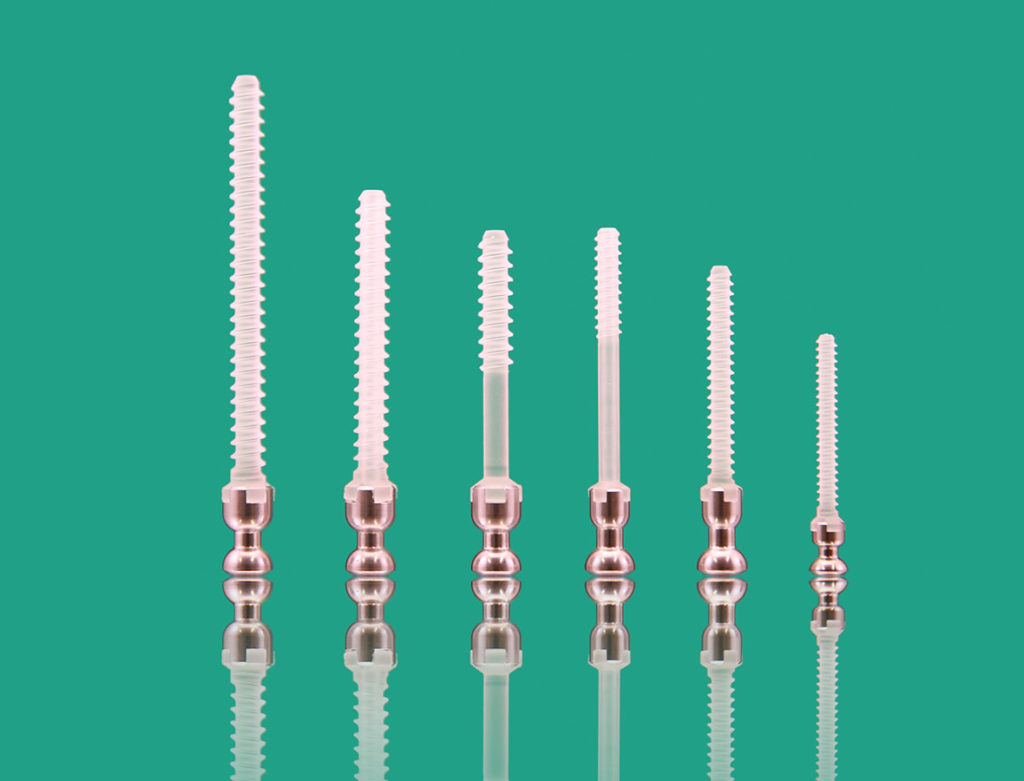
The Inion FreedomScrew™ is a bioabsorbable fixation screw designed to provide support during the healing process. Made from bioabsorbable polymer material, it gradually breaks down in the body over time, offering an alternative to permanent metal fixation. In Eero’s case, it was used to stabilize the syndesmosis as part of his surgical treatment.
Dr. Koivu explains that both suture-button devices with metal buttons and resorbable screws can be suitable fixation options. The choice depends on the injury, the surgical situation and the surgeon’s preferred technique.
One consideration with resorbable fixation is that it avoids leaving a permanent metal implant that may cause symptoms or require removal. It also avoids the potential interference of that implant with future MRI examinations. Dr. Koivu notes that a resorbable screw can provide a somewhat more flexible fixation compared with a conventional metal screw.
In Eero’s case, the selected approach provided a way to stabilize the injured syndesmosis while taking his future sporting activities into consideration.


The Road Back to the Ice
The first weeks after surgery required patience. Eero initially had a cast and was unable to put weight on the leg, making even ordinary everyday activities difficult.
Following the initial recovery period, he was able to gradually begin weight-bearing and rehabilitation. Working with physiotherapists, he progressed from simple exercises to more demanding strength training.
One milestone stood out in particular to him: getting rid of the crutches.
“It was an important moment, although walking was still quite difficult at first. I started doing more demanding strength exercises, and that made me feel that I was moving forward.”
After approximately two months on crutches and a further period of rehabilitation, Eero returned to the ice at around three months after the injury. Initially, he focused on light skating and simple exercises before gradually increasing the demands.
Returning to skating also meant rebuilding confidence. At first, he was cautious and unsure how the ankle would feel. But after a couple of sessions, that uncertainty began to disappear.

I could do the same things as before, and eventually I stopped thinking about the injury.”
Although a subsequent shoulder injury during summer training required another break from playing, his ankle continued to function well and did not prevent him from skating.
Back to Playing
Today, Eero is healthy and back playing ice hockey. While he still notices a slight difference in strength and movement compared with his other ankle, he says that the ankle functions well and does not bother him in his skates or during games.
Looking back, the experience was his first major long-term injury. Being away from the sport he loves was challenging, but the support of his teammates, the rehabilitation process and the gradual return to the ice helped him move forward.
For anyone facing a similar injury, Eero has a simple message: “I would say that it is possible to recover fully. The rehabilitation takes time, but if you follow the instructions and work consistently, you can get back to normal.”
For Eero, the most important thing is being back where he wants to be: on the ice, playing the sport that has been part of his life for so many years.
